Table Of Content

While natural oils like rosemary have shown promise, Bio-Pilixin Activation Serum is the result of rigorous scientific study. It's essential to manage expectations and understand that hair growth is a gradual process influenced by various factors, including genetics, diet, and overall health. As of March 2024, to our knowledge, there's only one clinical, controlled-study of rosemary oil with visual before and after results.
Hair Products
In that case, you might experience oily roots or greasy ends with rosemary oil—and tbh, any hair oil. Rosemary essential oil is a simple remedy that you can use at home, and it may even be competitive with commercial products. What’s more, it’s quite safe when used correctly and yields very few side effects. Much like oregano, peppermint, and cinnamon, rosemary is frequently found in essential oil form. Essential oils are highly concentrated and distilled extracts of volatile plant compounds. These are used for cooking, cleaning, beauty, health, and other purposes.
How To Use Rosemary Oil For Hair Growth In 2024, According To Experts - GLAMOUR UK
How To Use Rosemary Oil For Hair Growth In 2024, According To Experts.
Posted: Tue, 23 Jan 2024 08:00:00 GMT [source]
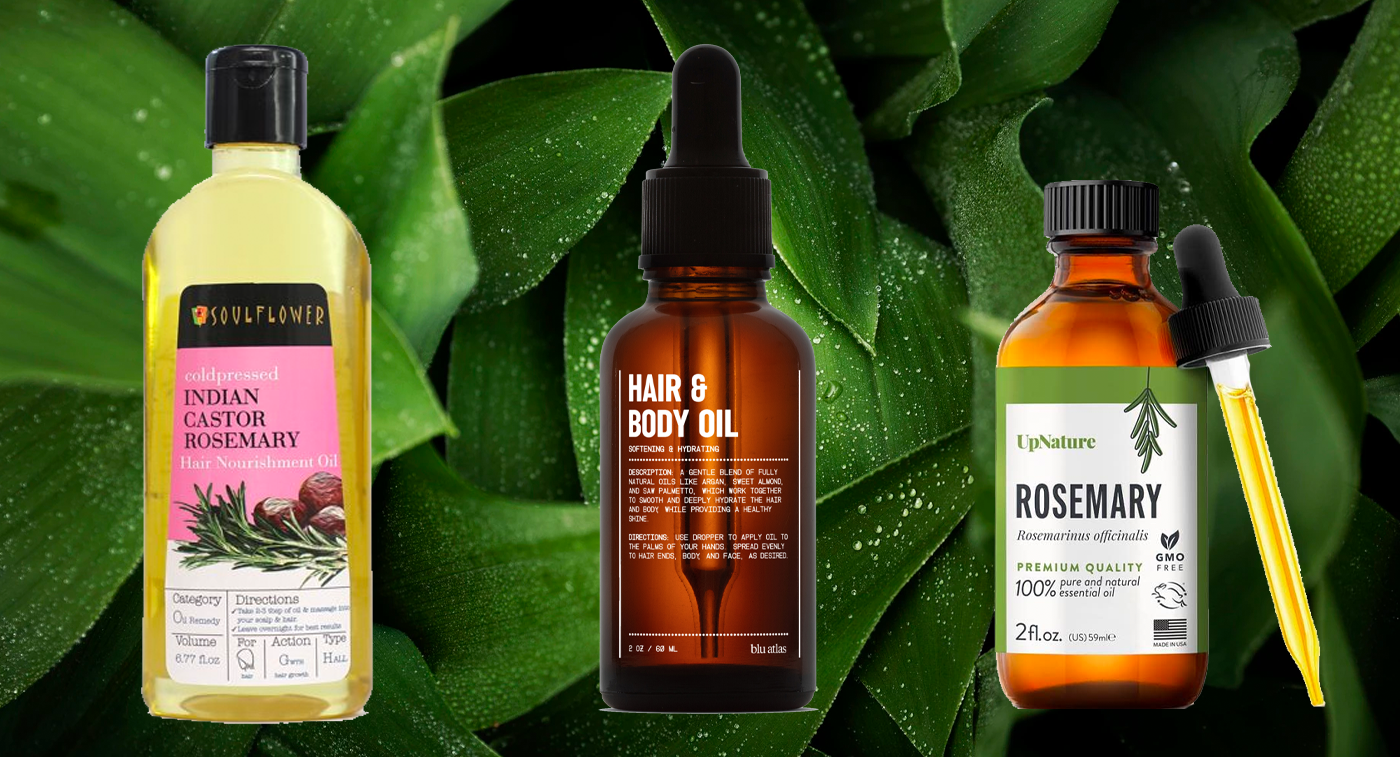
The Best Rosemary Oil for Hair Growth Products to Buy Online
Rosemary oil has antimicrobial properties, which also helps in dandruff by decreasing the yeast overgrowth. The same 2015 study that compared rosemary oil to minoxidil also found that the former was less itchy. There is also some evidence that rosemary oil can help increase blood supply in the scalp, which plays an important role in stimulating hair follicles and encouraging hair growth.
Can I apply rosemary oil directly to hair?
People should also avoid getting rosemary oil in their eyes or mouths and should keep it out of reach of children. Since joining ELLE.com in 2017, she has interviewed countless skincare professionals and has personally tested the latest and greatest products across makeup, skincare, and hair care. Bergamy suggests adding it to your shampoo or conditioner to get the benefits while washing your hair. Just be sure to thoroughly wash your hair to get the product out well. Made with rosemary, amla, and soothing aloe, this serum calms an irritated scalp, boosts overall shine, and stimulates hair growth.
Rosemary Oil Benefits
Dr. King adds that studies have even shown that rosemary oil combined with peppermint oil has helped promote hair growth in mice. "Mix it in with your shampoo using about two to three drops only," she says, adding that rosemary oil can be used on either wet or dry hair. If you’re using it on hair as a hair oil, you can also apply it to the ends for lubricant and emollient properties. Both Dr. Garshick and Dr. King say that rosemary oil can be applied directly on hair or scalp for maximum benefits. "The safest and most effective ways to use rosemary oil to reap the benefits include massaging about five drops directly onto the scalp with a small amount of carrier oil," says Dr. Garshick.
And depending on the type of hair loss, there are often more proven treatments like minoxidil, which can be used at the same time as trying less proven treatments like rosemary oil. And while sometimes there isn’t a reliable treatment for the hair loss, it’s still a good idea to make sure there isn’t a more serious underlying condition that’s been missed. Some people have claimed that rosemary oil can block 5α-reductase, the enzyme that converts testosterone to the more potent DHT which causes androgenetic alopecia (specifically male pattern hair loss). This is promising because it’s how finasteride (another hair loss drug) works. Studies about rosemary oil for hair growth are limited at this time, and many of the existing studies have been on animals, not humans.
Can rosemary oil treat hair loss?
It is believed that rosemary oil has strong anti-inflammatory properties which promote healing in the skin and scalp. After applying diluted rosemary oil, Viviscal Ambassador and trichologist Hannah Gaboardi recommends using a scalp massager. "Scalp massaging increases hair thickness by stretching the cells of hair follicles. This then stimulates the follicles to produce thicker hair. So using it in conjunction with rosemary oil would be very effective’’.
The science suggests that it may work but as with anything there is a catch, rosemary oil needs to be applied in the right quantities, over a long period of time to see results. “There is limited evidence for rosemary oil as a hair loss treatment, but seeing results from any hair loss treatment takes time, due to the average rate of hair growth, typically 1-1.5cm per month,” says Passam. The experts agree that it takes six months (at least) to see results. For most men, going bald (either partially or completely) has long been an inescapable part of the aging process.
However, this natural remedy may be safer and less likely to cause side effects than some hair growth medications. People with certain health conditions, including high blood pressure, ulcers, and inflammatory bowel disease, should not use rosemary essential oil. Our experts agree that rosemary oil is safe for all hair types, including color-treated hair. Just because the ingredient is trending on social media, that doesn’t mean it will work for everyone who has thinning hair. It’s clocked more than 2.3 billion views on TikTok, which is buzzing about the treatment’s possible ability to tackle thinning hair. But using rosemary oil to achieve a fuller, more lustrous mane isn’t a new concept.
Most people have a bit more hair in spring, with more hairs are in the anagen stage, while shedding tends to increase in autumn, with more hairs are in the telogen stage. It’s like a weak version of how some animals shed their winter coats. This all highlights what I was saying before – a paper with serious methodological issues tends to have lots of other issues.
But there’s a bunch of problems, because everything rosemary just seems to be problems. That’s why properly approved drugs like minoxidil are really the first point of call. To get approved as a drug, it actually worked in humans in robust clinical trials as well.
Below, the options that passed our tests and garnered the best results, which you can trust to condition and lengthen your hair without excess grease or scalp buildup. If you do end up trying rosemary oil, make sure it’s diluted to reduce the risk of irritation. Assuming this study used cineole rosemary oil, it was diluted it by about 162 times, which converts to 1 drop of rosemary oil per 8 mL of carrier oil. The levels of any potential effective active ingredients in rosemary oil will vary a lot with where and when it’s grown, how it’s harvested and extracted, how it’s stored, and many other factors. For example, there are three main types of rosemary oil, based on what their major components are.
Because rosemary essential oil is highly concentrated, it's important to use it with caution if you plan to use it on its own. Add a few drops into the palm of your hand and mix with a carrier oil like jojoba, rosehip, or coconut oil. "Men can use rosemary oils at the base of the roots, one to three times per week or less often if the hair is already oily," says Dr. Kobets. If you have a naturally dry scalp, you may actually like using rosemary oil more frequently, as it may reduce dryness and dandruff when used regularly.
However, there isn’t yet any clinical evidence to suggest rosemary oil is an effective female hair loss treatment. After taking a bath or shower, mix 5 drops of rosemary essential oil with 1 teaspoon of a carrier oil such as jojoba oil or coconut oil. Dr. Lal also recommends the HAIRtamin Scalp Serum Natural Hair Growth Thickening Treatment, enriched with rosemary oil and other "hair growth-promoting ingredients" like saw palmetto and procapil, says Dr. Lal. While some evidence supports their effectiveness, further research is needed, just like with rosemary oil. Nevertheless, this serum has received impressive ratings and is easy to apply. To DIY your own diluted rosemary oil hair treatment, Dr. Doyle recommends mixing two tablespoons of your carrier oil of choice (she recommends jojoba) with two to three drops of rosemary oil.
“Rosemary oil’s anti-inflammatory properties help to reduce scalp irritation, dandruff, and itching, providing a more optimal environment for healthy hair growth,” Majeed adds. If you’re buying an essential oil version, the key thing to know is it must be diluted before applying. “Rosemary essential oil is highly concentrated, and applying it directly to the scalp can lead to skin irritation or sensitivity. To avoid this, it’s essential to dilute the rosemary essential oil with a carrier oil – a mild, neutral oil like coconut oil, almond oil, or jojoba oil.” says Dr. Majeed. Alternatively, you can add a few drops into your existing haircare, or save the faff altogether by buying pre-mixed oils or leave-in treatments. You don’t have to dilute rosemary hair for your hair if it’s already mixed with another oil (usually castor oil or jojoba oil).




No comments:
Post a Comment